
Research Activities
HUMANISTA Strengthens Research Collaboration with Polish Partners
HUMANISTA continues to expand its research collaboration through the active involvement of colleagues from Kazimierz Wielki University in Bydgoszcz, Poland.
Aleksandra Błachnio and Izabela Kapsa, both representing Kazimierz Wielki University, served as members of the Scientific Committee of the conference, contributing their academic expertise and supporting the event's scientific quality.
A further contribution came from Renata Tomaszewska, who presented a paper entitled “AI Literacy as a Protective Competence for Workers in Society and Economy 5.0”. The paper addresses the growing importance of AI literacy as a competence that can help individuals navigate the changing demands of contemporary workplaces and the evolving relationship between technology, society and the economy.
These contributions demonstrate the commitment of HUMANISTA partners to advancing research on the human dimensions of technological change and strengthening academic exchange across institutions. They also reflect the network's broader objective of fostering interdisciplinary cooperation at the intersection of humanities, social sciences, education and STEM.
The participation of the Polish colleagues represents another valuable step towards developing sustainable research partnerships and creating opportunities for future joint academic initiatives.
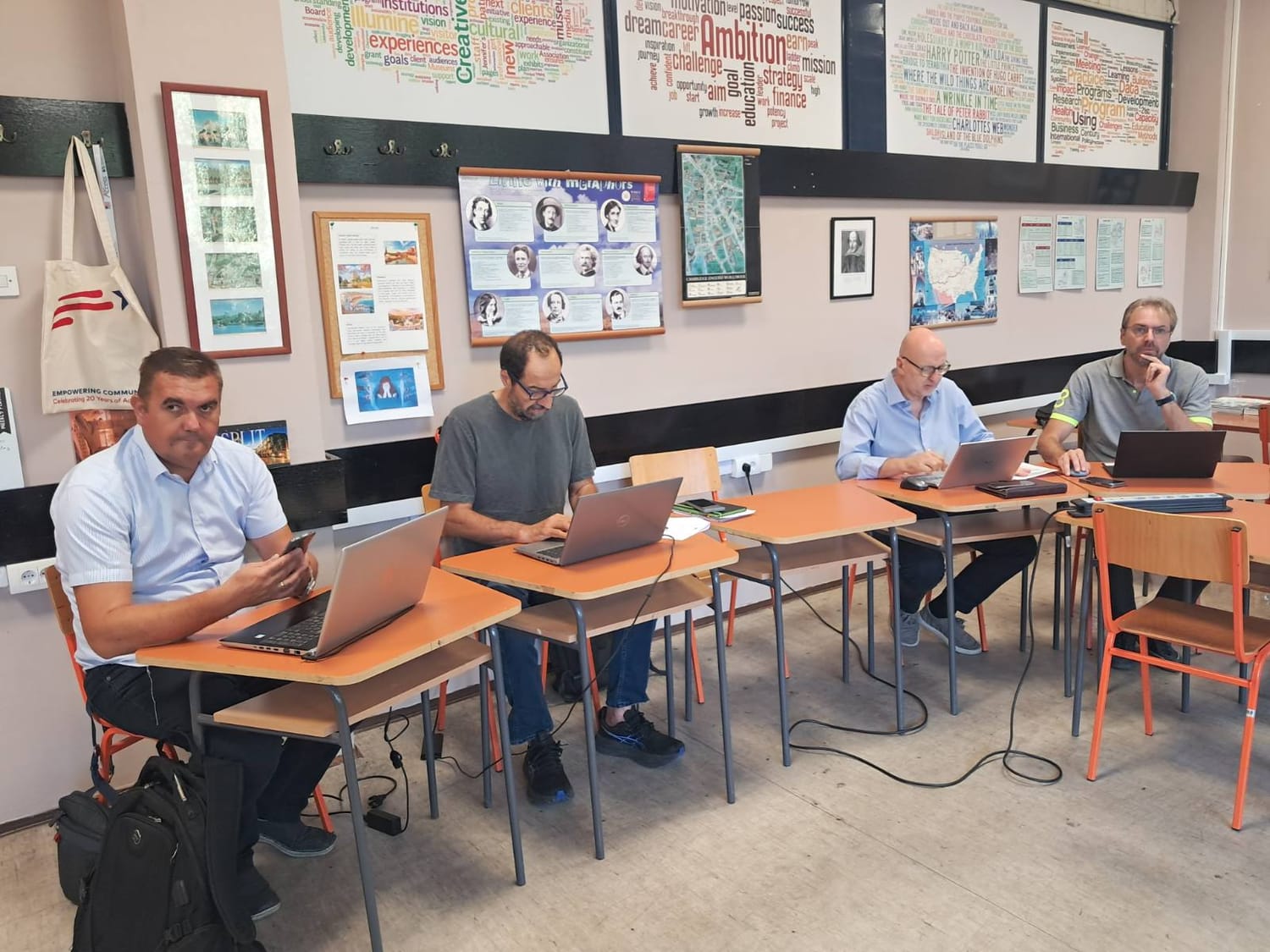
HUMANISTA Network Members Participate in the SDUTSJ 2026 International Conference in Slovenia
Members of the HUMANISTA Network actively participated in the 4th International Conference of the Slovene Association of LSP Teachers (SDUTSJ), titled Languages for Specific Purposes in a Changing World, held from 14–16 May 2026 at Terme Čatež Thermal Resort, Slovenia. The conference gathered researchers, teachers, and practitioners from across Europe and beyond to discuss current trends and challenges in Languages for Specific Purposes (LSP), with a particular focus on digital transformation, innovative teaching approaches, and artificial intelligence in education.
More information about the conference is available on the official website: SDUTSJ Conference 2026
Representatives of several HUMANISTA partner institutions presented their research during the conference:
Joanna Kic-Drgas (Adam Mickiewicz University in Poznań) and Olivia Chirobocea-Tudor presented the paper From personalisation to digital competences: The impact of artificial intelligence on ESP teaching and learning.
Jelena Jerković (University of Novi Sad) and Bojana Komaromi presented Building innovative teaching skills: Insights from an online networked learning course.
Lena Tica (University of Kragujevac) and Jana Živanović presented "(Beyond) career goals: Motivational dimensions in learning English for specific purposes".
Jelena Anđelković and Marija Meršnik (University of Belgrade) presented Measuring and improving ESP test quality using Moodle statistics indicators.
In addition to the conference presentations and discussions, HUMANISTA members used this opportunity to strengthen cooperation within the network and discuss upcoming activities and future collaborations. Particular attention was dedicated to the preparation of the first HUM-STEM Summer School, which is planned to take place in July 2026 and represents an important new initiative within the HUMANISTA network.
The conference once again proved to be an excellent platform for exchanging ideas, fostering international cooperation, and promoting innovative approaches in LSP teaching and research.
The Book of Abstracts is available here: Book-of-Abstracts_SDUTSJ_AELFE-2026-Conference.pdf


Research Presentation: International Collaboration on AI Pedagogy

Ivana Krsmanović and Lena Tica presented their co-authored paper titled "Artificial Intelligence Pedagogy: The Student Perspective" at the International Scientific Conference: Humans in the Economy and Society 5.0 – New Educational and Professional Challenges in the Age of AI Development, held in Bydgoszcz, Poland, on May 29–30, 2025.
The paper is the result of a collaborative effort between the University of Kragujevac and Kazimierz Wielki University, focusing on students’ perceptions of AI-driven educational environments and the implications for future pedagogical practices.
The event was organized by the Department of Labour Pedagogy and Andragogy at Kazimierz Wielki University, bringing together researchers engaged in exploring educational and professional shifts in response to AI development.
Created with © systeme.io